

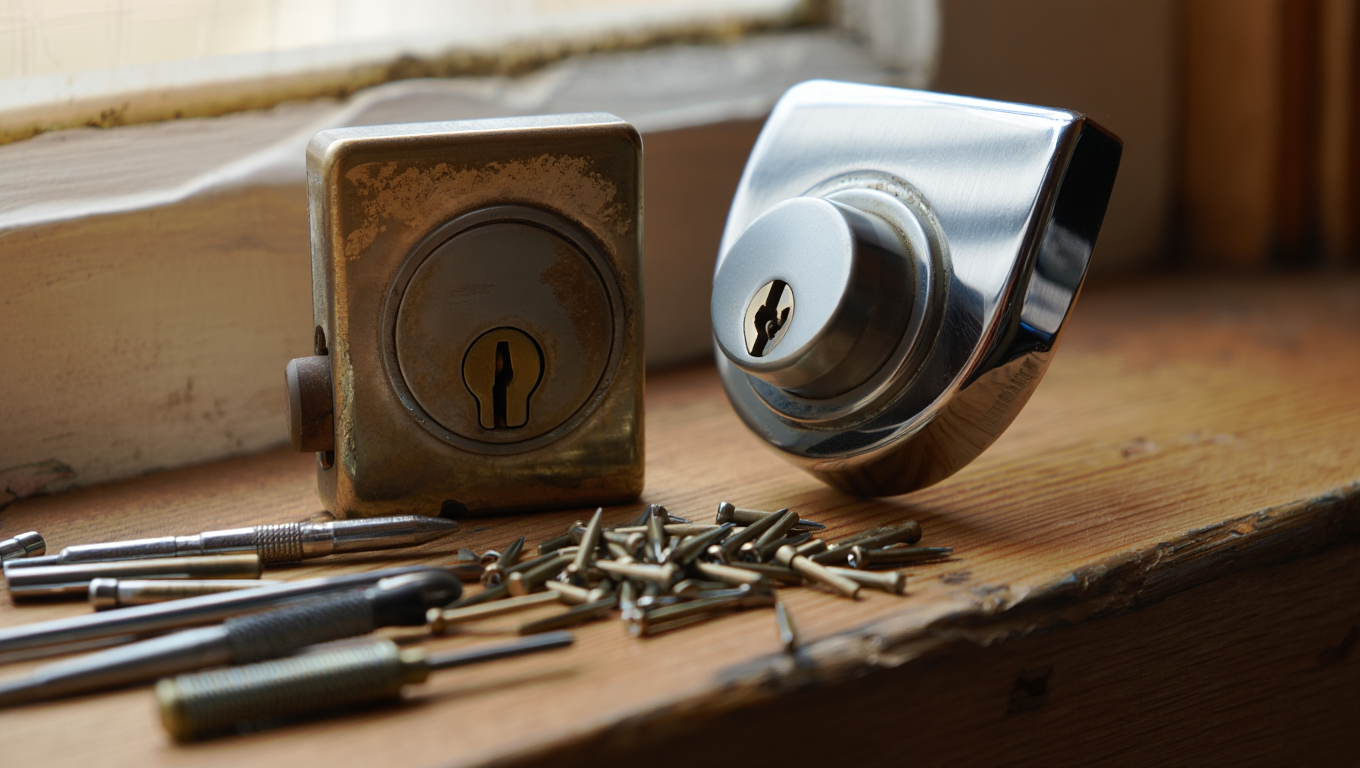
Homeowners often wonder whether they should repair, rekey, or completely replace their door locks when updating their home security. Understanding rekey vs replace locks for home security helps determine the best option depending on the condition of the lock and the level of security you need. Both approaches improve safety, but they solve different problems.
Rekeying modifies the internal pins inside the lock so a new key works while the old key no longer functions. Replacing locks involves installing entirely new hardware. Professional services such as lock change and rekey lock services can help homeowners determine which option best fits their situation.
Rekey vs Replace Locks: Understanding the Difference
Although both services improve security, they work very differently. Rekeying keeps the same lock hardware but changes the internal pin configuration so a new key operates the lock. Lock replacement removes the existing lock entirely and installs a new one.
Choosing the right option depends on factors such as lock condition, security concerns, and whether you want to upgrade to newer locking technology.
What Rekeying a Lock Means
Rekeying involves removing the lock cylinder and replacing the internal pins so the lock works with a new key pattern. The exterior hardware remains unchanged.
This is one of the most common services provided by residential locksmith technicians because it quickly restores security when keys are lost or ownership changes.
Rekeying is typically recommended when:
- You move into a new home
- You lose your house keys
- You want old keys to stop working
- You want multiple locks to use the same key
Because the lock hardware remains the same, rekeying is usually faster and less expensive than replacing locks.
What Replacing a Lock Means
Replacing a lock involves removing the existing hardware from the door and installing a completely new lockset. This may include a new deadbolt, knob lock, or smart lock system.
Lock replacement may be necessary when:
- The lock is damaged or worn
- The lock style needs upgrading
- You want a different security level
- The existing lock cannot be rekeyed
Some homeowners take the opportunity to upgrade to newer security technologies. Modern options such as electronic or smart locks are often discussed in resources explaining how smart locks improve home security.
When Rekeying Is the Better Option
Rekeying is often the best choice when the lock hardware is still in good condition and you simply want to prevent old keys from working.
Common situations where rekeying makes sense include:
- Moving into a newly purchased home
- Tenant turnover in rental properties
- Lost or stolen keys
- Creating a master key system
Because locksmiths only change the internal pins, the service is typically completed quickly.
Homeowners researching security upgrades often discover helpful guidance through articles such as five signs it may be time to rekey your locks.
When Lock Replacement Is the Better Choice
Sometimes replacing the lock is the smarter decision, particularly when the hardware itself is damaged or outdated.
Reasons to replace locks may include:
- Broken or malfunctioning lock mechanisms
- Old locks with weak security
- Locks that have been forced or tampered with
- Upgrading to stronger deadbolts or smart locks
Replacing the lock can provide stronger protection when the current hardware no longer meets modern security standards.
Security Considerations for Both Options
Whether you choose to rekey or replace your locks, the goal is to ensure your home remains secure.
Locksmiths evaluate several factors when recommending a solution:
- Condition of the lock hardware
- Number of people with access to the property
- Type of door and lock installation
- Security requirements for the property
Understanding how lock mechanisms function internally can also help homeowners appreciate the importance of proper installation and maintenance. Detailed explanations of door lock components and mechanics illustrate how pins and cylinders interact with the key.
Cost Differences Between Rekeying and Replacing
Rekeying is typically less expensive because it uses the existing hardware. Locksmiths simply adjust the internal pins to match a new key.
Lock replacement costs more because new hardware must be purchased and installed.
However, if the existing lock is worn or damaged, replacing it may provide better long-term value and security.
Combining Rekeying With Other Security Upgrades
Many homeowners use rekeying as part of a broader home security update. For example, they may rekey exterior locks while also installing smart locks, door reinforcement hardware, or security cameras.
This layered approach ensures that physical access points remain secure while also improving convenience and monitoring.
Frequently Asked Questions
Is it cheaper to rekey or replace locks?
Rekeying is usually cheaper because the existing lock hardware remains in place and only the internal pins are changed.
Can all locks be rekeyed?
Most standard locks can be rekeyed, but some specialized locks may require replacement depending on the design.
How long does rekeying take?
A professional locksmith can usually rekey a lock in just a few minutes.
Do new locks provide better security?
New locks may offer stronger materials, improved designs, or additional security features depending on the model.
Should I rekey my locks after buying a house?
Yes. Rekeying ensures that any old keys from previous owners or contractors will no longer open the locks.
Conclusion
Choosing between rekeying and replacing locks depends on the condition of your current hardware and your overall security goals. Rekeying is a quick and cost-effective solution when you want to invalidate old keys while keeping the same locks. Replacing locks may be the better option when upgrading security or repairing damaged hardware.
If you need guidance deciding which option is best for your property, you can speak with a professional Houston locksmith or explore available locksmith services in Houston.
For additional information about residential security and protecting entry points, organizations such as the Federal Trade Commission home security guide provide practical advice for homeowners.