

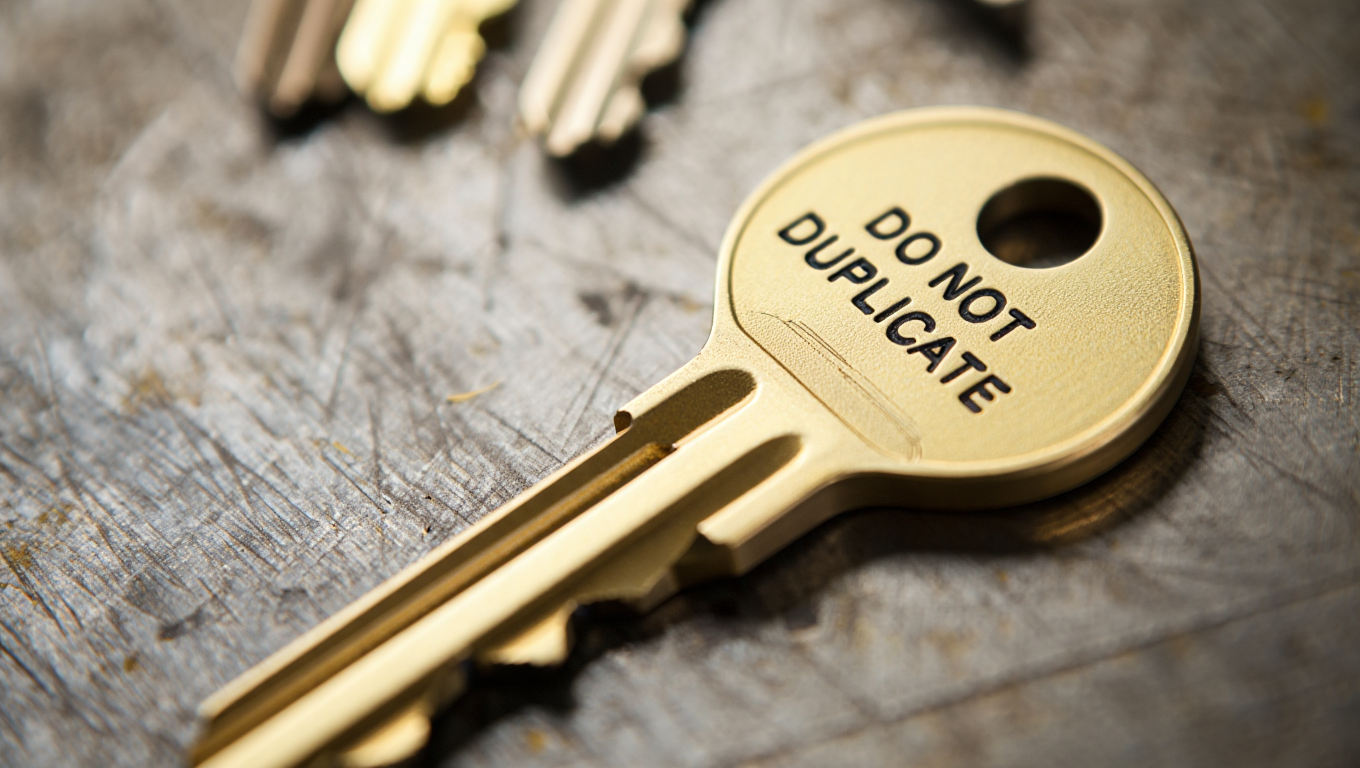
Many keys are stamped with the words “Do Not Duplicate,” which often makes people wonder whether those keys can actually be copied. Understanding can do not duplicate keys be copied by a locksmith helps clarify how these markings work and what restrictions truly apply. While the phrase suggests duplication is prohibited, the reality depends on the type of key and the policies of the locksmith or key service provider.
Traditional keys marked with “Do Not Duplicate” are usually standard mechanical keys with a warning stamped on the metal. In most cases, the stamp itself does not physically prevent duplication. Professional locksmiths who offer key cutting and duplication services often evaluate the type of key and determine whether it falls under restricted key systems or simply contains a warning.
What Does “Do Not Duplicate” Mean on a Key?
The phrase “Do Not Duplicate,” often abbreviated as DND, is typically stamped onto a key by the manufacturer or property owner. The marking is intended to discourage unauthorized copying, especially in situations where controlling access is important.
Common places where these keys are used include:
- Apartment complexes
- Office buildings
- Maintenance rooms
- Equipment storage areas
- Commercial properties
The goal of the marking is to remind key cutting providers that the key should only be duplicated with permission from the property owner or authorized party.
Is the Marking Legally Enforceable?
In most cases, the “Do Not Duplicate” stamp itself is not legally binding. It functions primarily as a request rather than a legal restriction.
Many hardware stores or locksmiths choose to honor the request out of professional policy. However, unless the key belongs to a restricted key system, duplication may still be technically possible.
Restricted Keys vs Standard Do Not Duplicate Keys
It is important to distinguish between standard keys stamped with “Do Not Duplicate” and restricted key systems.
Restricted key systems are specifically designed to prevent unauthorized copying. These systems use patented key blanks and controlled distribution channels that limit who can duplicate keys.
Some commercial buildings use systems such as Instakey controlled key systems to manage access and maintain strict key control.
Unlike simple DND stamped keys, restricted keyways require authorization before copies can be created.
When Locksmiths Can Copy Do Not Duplicate Keys
Professional locksmiths evaluate several factors before duplicating a key that contains a DND stamp.
Some situations where duplication may still be possible include:
- The key is a standard mechanical key
- The requester provides proof of ownership
- The locksmith has authorization from the property owner
- The key does not belong to a patented restricted system
Locksmiths are trained to verify requests carefully to prevent unauthorized duplication of keys used in commercial or residential properties.
People who want a deeper explanation of the topic often explore resources discussing whether master keys and restricted keys can be duplicated.
Why Property Owners Use Do Not Duplicate Keys
Property managers and business owners frequently use DND keys as part of a broader security strategy.
The goal is to discourage tenants or employees from making unauthorized copies that could create security risks.
Examples of where these keys are commonly used include:
- Apartment building maintenance areas
- Commercial office storage rooms
- Utility closets
- Equipment rooms
Although the marking alone does not physically prevent duplication, it encourages responsible handling of access keys.
How Key Control Improves Security
Maintaining control over how many keys exist is one of the most important aspects of physical security.
Without proper key control, unauthorized copies may circulate without the property owner’s knowledge.
Businesses often implement layered security measures such as:
- Restricted keyway systems
- Master key systems
- Electronic access control
- Security cameras
These systems help property owners track access and prevent unauthorized entry.
When a Locksmith May Refuse to Duplicate a Key
Even if duplication is technically possible, a locksmith may choose not to copy a key if there are security concerns.
Locksmiths typically refuse duplication when:
- The key belongs to a patented restricted system
- The requester cannot verify authorization
- The key is part of a controlled commercial key program
Professional locksmiths follow ethical standards designed to protect property owners and prevent unauthorized access.
What to Do If You Need an Authorized Copy
If you need a legitimate copy of a DND key, the safest approach is to contact the property owner, building manager, or locksmith responsible for the system.
Authorized duplication ensures that the security system remains properly controlled and documented.
If you need help evaluating a key or determining whether it can be duplicated, you can speak with a residential locksmith professional who understands the rules governing different key systems.
Frequently Asked Questions
Are do not duplicate keys illegal to copy?
No. In most cases the marking itself is not legally enforceable unless the key belongs to a restricted key system.
Why do some stores refuse to copy these keys?
Many hardware stores follow internal policies that respect the marking and avoid duplicating keys labeled “Do Not Duplicate.”
Can locksmiths make copies of these keys?
Yes, depending on the key type and whether authorization can be verified.
What type of keys cannot be copied?
Patented restricted keys and controlled key systems often require authorization before duplication is allowed.
How can businesses prevent unauthorized key copies?
Businesses often use restricted keyway systems that limit who can access key blanks.
Conclusion
The phrase “Do Not Duplicate” is intended to discourage unauthorized key copying, but it does not always prevent duplication. Whether a key can be copied depends on the type of key, the security system involved, and the policies of the locksmith handling the request.
If you need help evaluating a key or creating authorized duplicates, you can contact a Houston locksmith technician or learn more about available locksmith services in Houston.
For more information about physical security and access control standards, the National Institute of Standards and Technology security publications provide additional insight into protecting property and controlling key access.